

Rajshahi, Bangladesh, 8 October 2025 — Rural roads are the lifeline of Bangladesh’s economy, connecting people to markets, schools, and health services. Yet when poorly planned, roads can disrupt water flows, trigger flooding, and erode easily—undermining the very communities they are meant to serve.
Recognizing these challenges, the Global Center on Adaptation (GCA) and its partners—MetaMeta Research B.V., Socioconsult Ltd., and WAVE Foundation—are helping transform rural transport into climate-smart infrastructure through the development of Green Roads for Water (GR4W) under an upcoming rural transport project. Central to this effort is women’s leadership, ensuring roads not only support mobility but also strengthen local resilience, manage water efficiently, and contribute to watershed-wide adaptation.
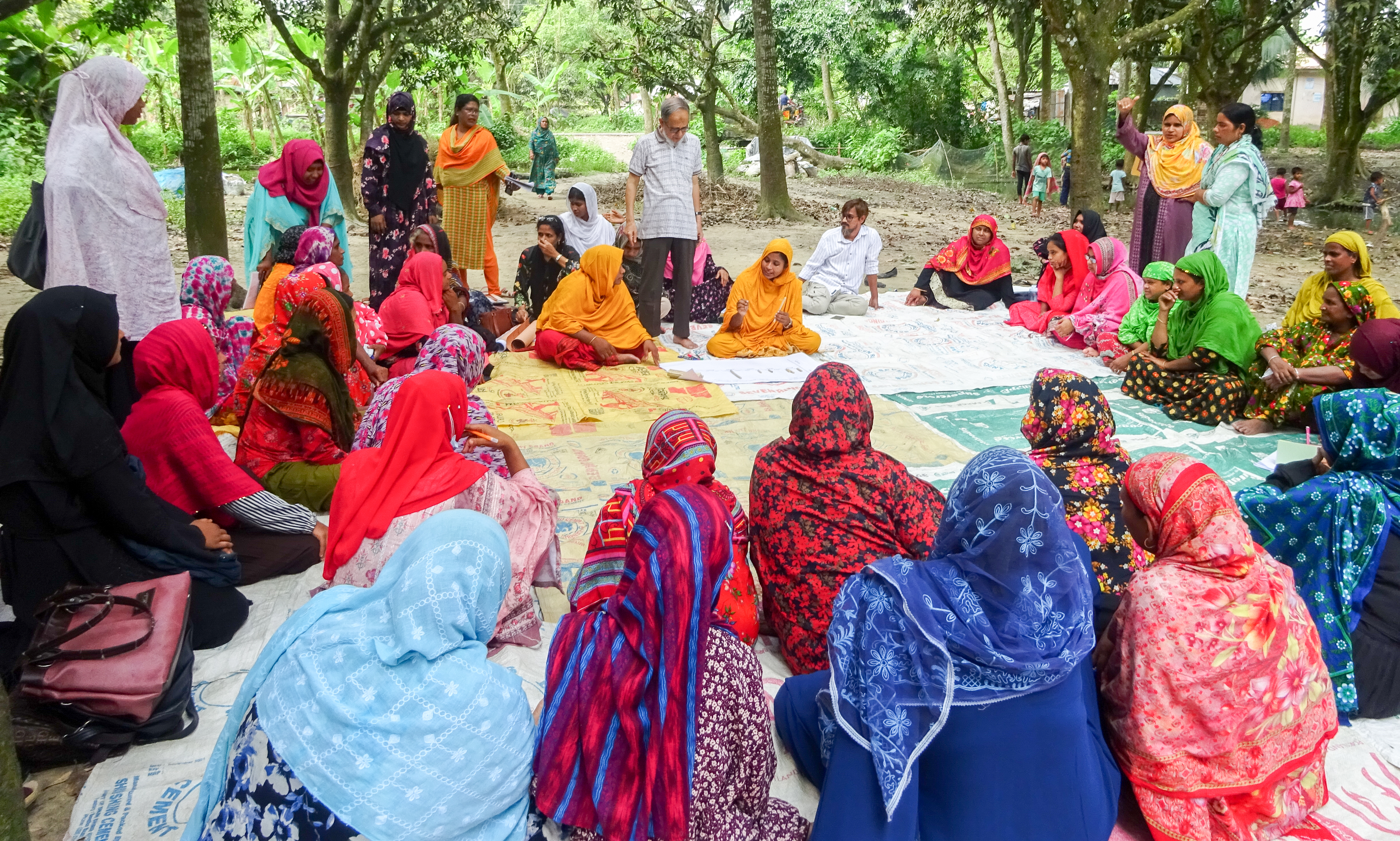
Women from the hinterlands of two selected roads in Godagari and Mohonpur upazilas of Rajshahi are leading locally led planning processes. Through Women’s Adaptation Labs, they collaborate directly with engineers, hydrologists, and local experts to co-design road systems that enhance water security, reduce climate risks, and protect livelihoods.
From Knowledge to Action
Building on the first phase of training held in August 2025, 24 women enumerators completed a rapid census of 2,141 households and a detailed survey of 1,100 households to map local climate vulnerabilities and risks. A second round of capacity-building, held from 4–8 October, equipped 14 community mobilizers with practical tools and facilitation skills to guide women’s groups in developing locally led adaptation plans.
Over five days, the mobilizers learned to connect road design with community priorities through participatory methods such as transect walks, resource mapping, and seasonal analysis. Field exercises in nearby villages enabled them to translate technical concepts into actionable community dialogues—turning women into facilitators of resilience.
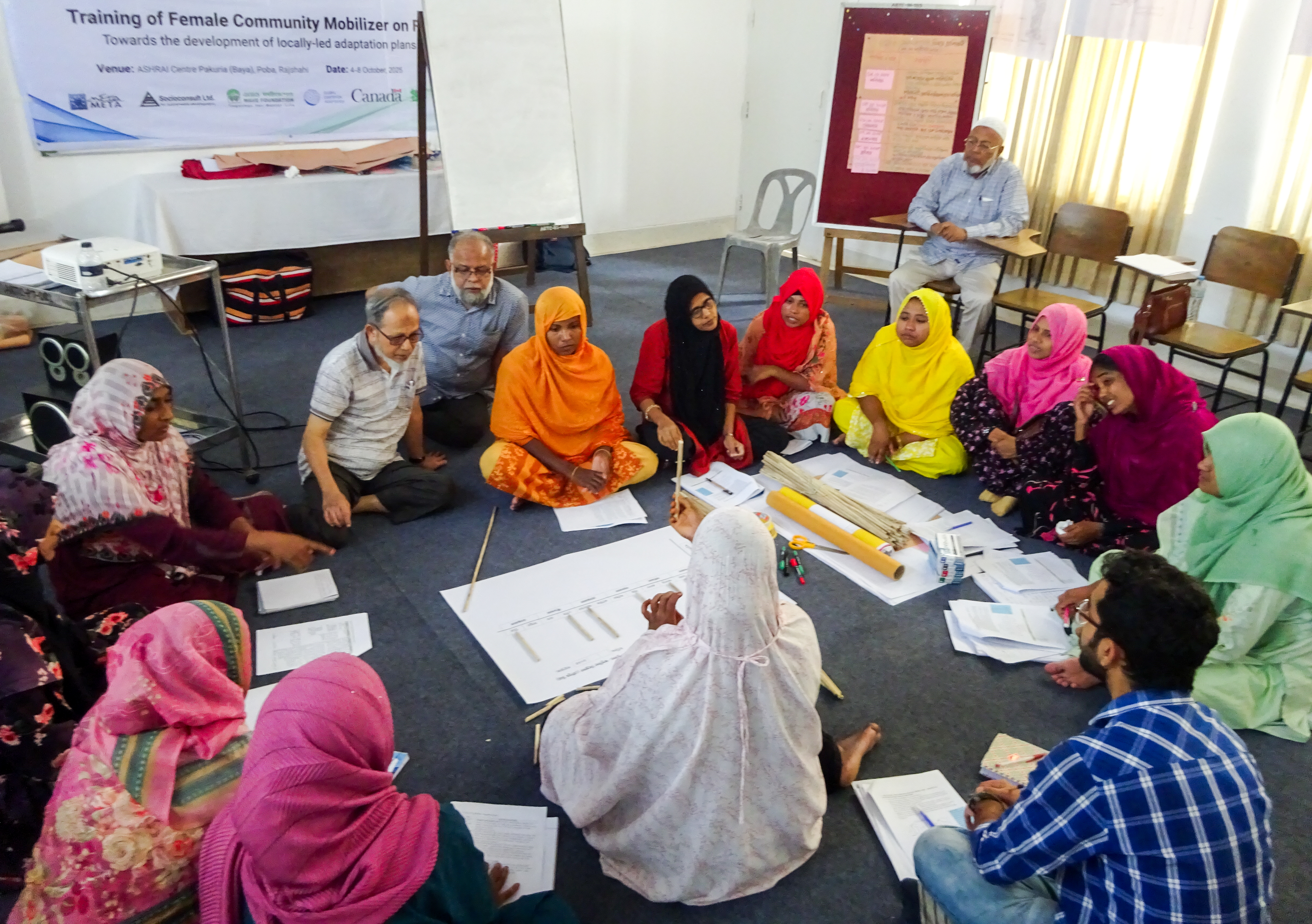
Women Mobilizers Lead Participatory Planning
The mobilizers will now conduct Focus Group Discussions (FGDs) across 15 villages (mouzas), using the participatory tools to help local women identify key road–water challenges and co-create feasible solutions. Each discussion begins with sharing findings from the household survey, validating local insights, and visualizing the road network through mapping exercises. Together, the groups will outline problems, propose solutions, and define roles for communities, government, and landowners in maintaining Green Roads for Water.
What Comes Next
The mouza-level plans developed through these sessions will be consolidated into union-level adaptation plans and validated through Women’s Adaptation Labs (WALs). These labs will serve as interactive spaces where women representatives, community mobilizers, local leaders, engineers from the Local Government Engineering Department (LGED), and Union Parishad officials come together to discuss and refine proposed road–water solutions.
Through the labs, women will present the findings from their community sessions, share practical insights, and jointly assess which interventions are most viable for implementation. Technical experts will help translate local priorities into design and maintenance actions, while local authorities will guide alignment with existing road development plans. The WALs will also identify potential areas for co-financing, maintenance partnerships, and follow-up monitoring.