

Narayanganj, Bangladesh, 10 November 2025 — In the informal settlements of Narayanganj, where heat, waterlogging, poor drainage, and unsafe water increasingly shape daily life, women are stepping forward with new tools, collective voice, and a platform for action. Women’s Adaptation Labs (WALs), launched this year by the Global Center on Adaptation (GCA) in collaboration with Practical Action Bangladesh and Society for the Promotion of Area Resource Centers (SPARC), with support from Global Affairs Canada, are enabling women residents to generate community-owned climate data and bring their lived realities directly to city authorities.
Established across five priority settlements—Shumilpara, Balur Math Colony, Risheepara, Rally Bagan, and Guhobari—the WALs bring together organized groups of women to document climate-related challenges, collect settlement-level information, and participate in structured dialogues with technical experts and the Narayanganj City Corporation (NCC). The Labs focus on strengthening women’s understanding of local climate impacts and building robust community information systems
Insights generated by the WALs will directly inform People’s Adaptation Plans for Narayanganj, supported by GCA as part of its support to the Asian Development Bank’s US$ 138.93 million Narayanganj Green and Resilient Urban Development Project (NGRUDP). NGRUDP aims to provide reliable, sustainable, and inclusive urban services in Narayanganj, the fourth most populated city in Bangladesh. The Project will invest in safe drinking water, drainage, waste management, recreational facilities; governance; and improved capacity of NCC and local communities to strengthen climate adaptation and sustainability of urban services. It will also support the preparation of three masterplans for improved municipal services in NCC, which include an Urban Action Plan, a Solid Waste Management Masterplan, and a Sewerage Masterplan.
From 29 October to 9 November 2025, day-long WAL meetings were organized in each settlement, to discuss and explore how climate change compounds existing pressures—rising indoor heat, persistent waterlogging, blocked drains, mounting waste, disrupted livelihoods, constrained mobility, and heightened health risks. These conversations provided women with a forum to reflect on environmental changes and express how these shifts affect their daily lives.
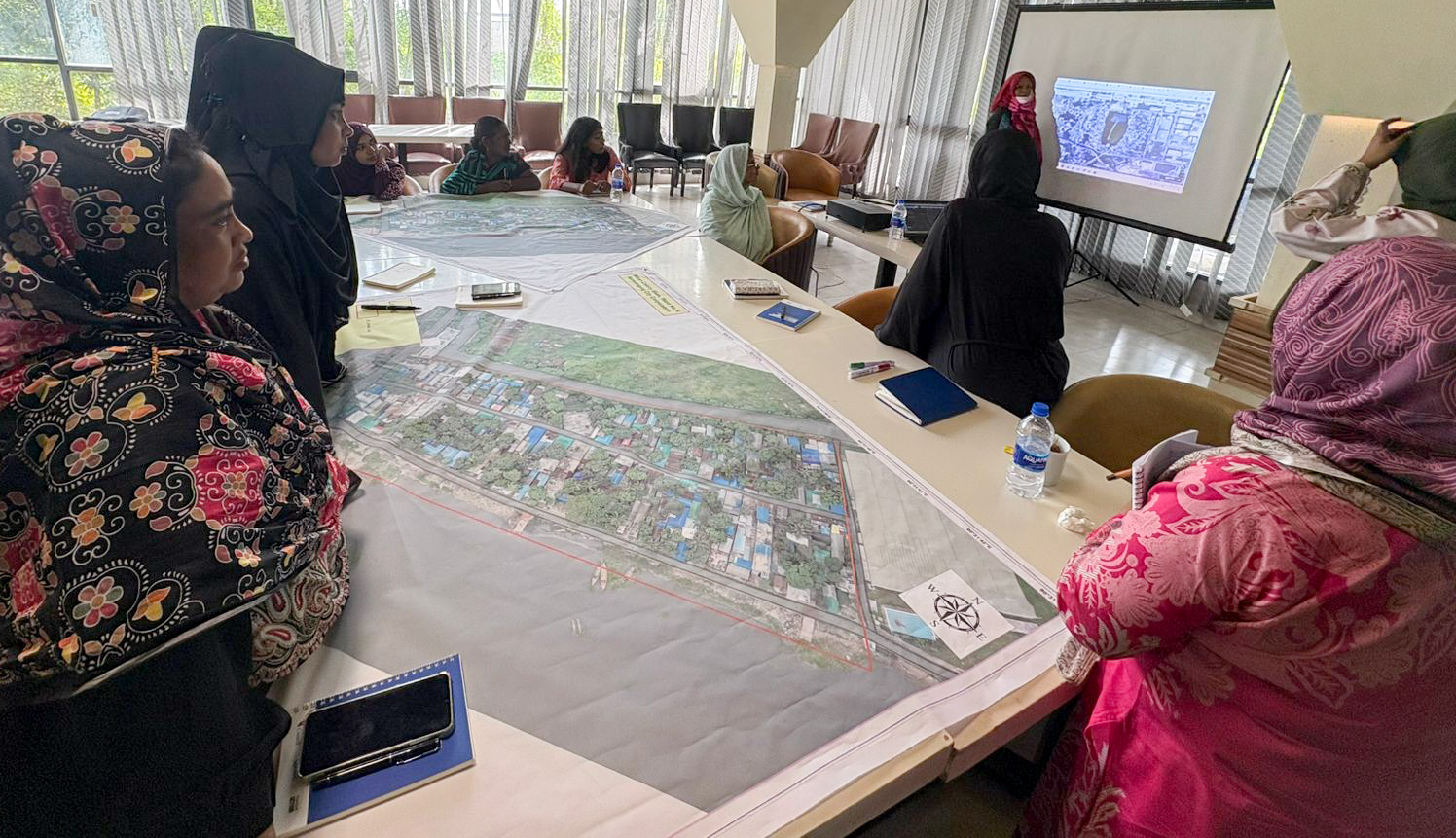
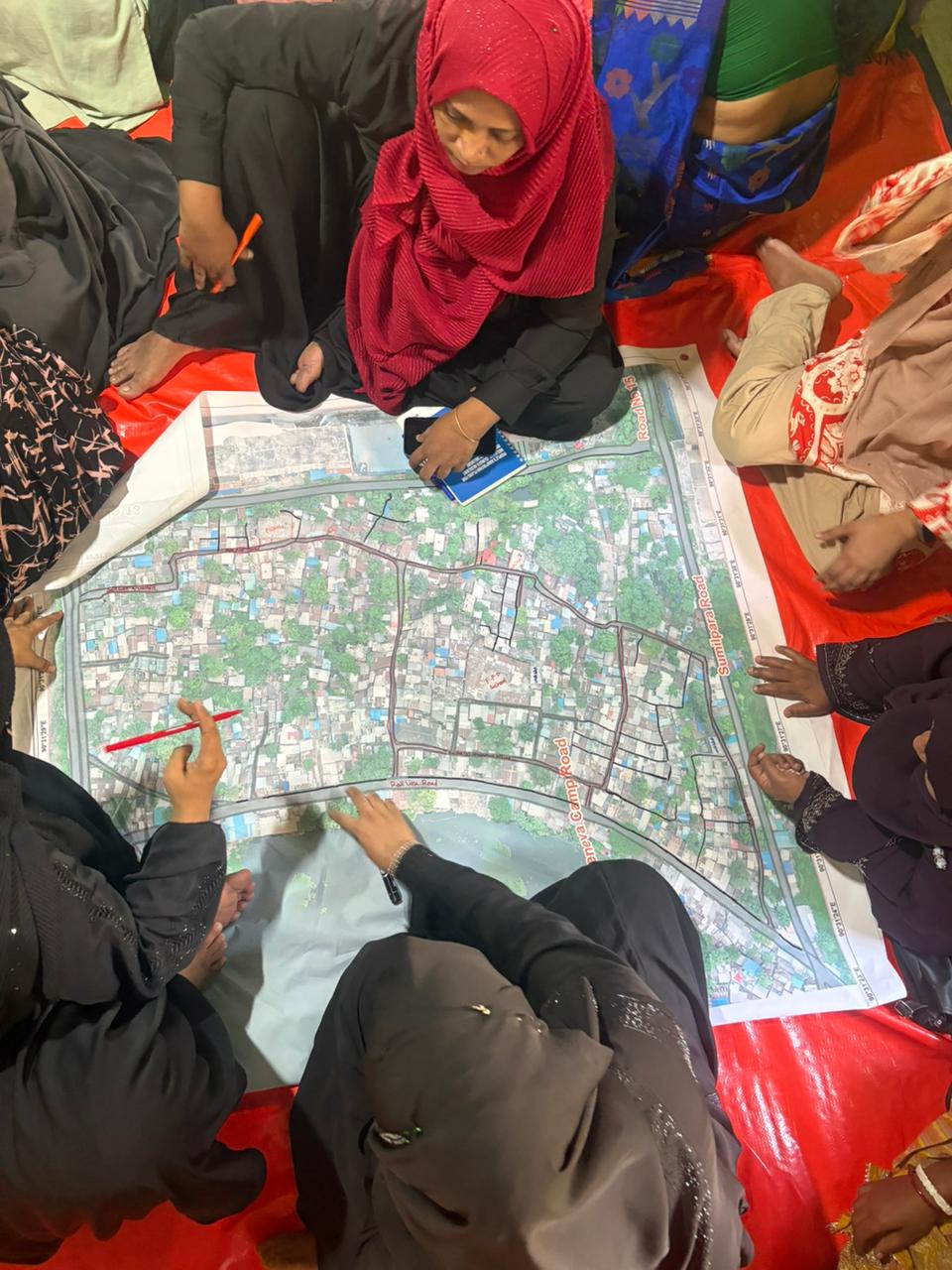
A major milestone during these meetings was hands-on community mapping. Using large satellite maps, WAL members identified households, key resources, infrastructure gaps, high-risk zones, and areas repeatedly affected by flooding or extreme heat. WAL teams also began household enumeration, visiting homes to collect demographic information, document climate-related challenges, and identify priority needs. This work—continuing over the coming month—will form a comprehensive settlement-level dataset on household-level climate vulnerability.
All data is being recorded in community registers maintained by the WALs, creating living documents that will support follow-up on household needs and provide evidence for dialogue with city officials. Participants recognized the value of the mapping and data collection exercise for their own deliberations and understanding of climate impacts, beyond informing investments by NGRUDP. “Information is our power. It helps us prioritize community needs in more equitable ways and to engage with the NCC and other investors,” said Neela Akhter of Shumilpara Colony, underscoring the women’s determination to use community-generated data to engage city authorities in future.
On 9 November 2025, WAL members met with NCC representatives to share initial insights from mapping and early data collection. They acknowledged this was the first engagement with the Corporation, a body that will play a key role in supporting their adaptation needs. As they highlighted worsening heat, frequent waterlogging, deteriorating pathways, and the escalating care burden on women during climate stresses, Corporation officials, and officials from other bodies that attended, worked with them to identify other opportunities for funding the priorities they will highlight in their People’s Adaptation Plans. A representative from the District Relief and Rehabilitation Office, for instance, encouraged WALs to submit proposals to the NCC once the Plans are complete, noting that funds would be available through a BDT 40 lakh (approximately €28,000) small-grant window for community-led projects.
The formalization of a role for the WALs in the NGRUDP project, and in working with the NCC in future, is a key objective of the process. Moinul Islam, NCC Town Planner, said although the City Corporation has had various community-led committees for development activities, they have never had one dedicated specifically to climate adaptation. The WALs are a first of its kind and can serve as important data sources for designing future climate adaptation projects. He also indicated NCC’s interest in eventually institutionalizing the WAL model within its formal community-engagement procedures. Routine engagement between the NCC and WALs will strengthen communication between communities and city authorities—ensuring that women’s voices, data, and lived experience shape a more informed and inclusive urban adaptation agenda.